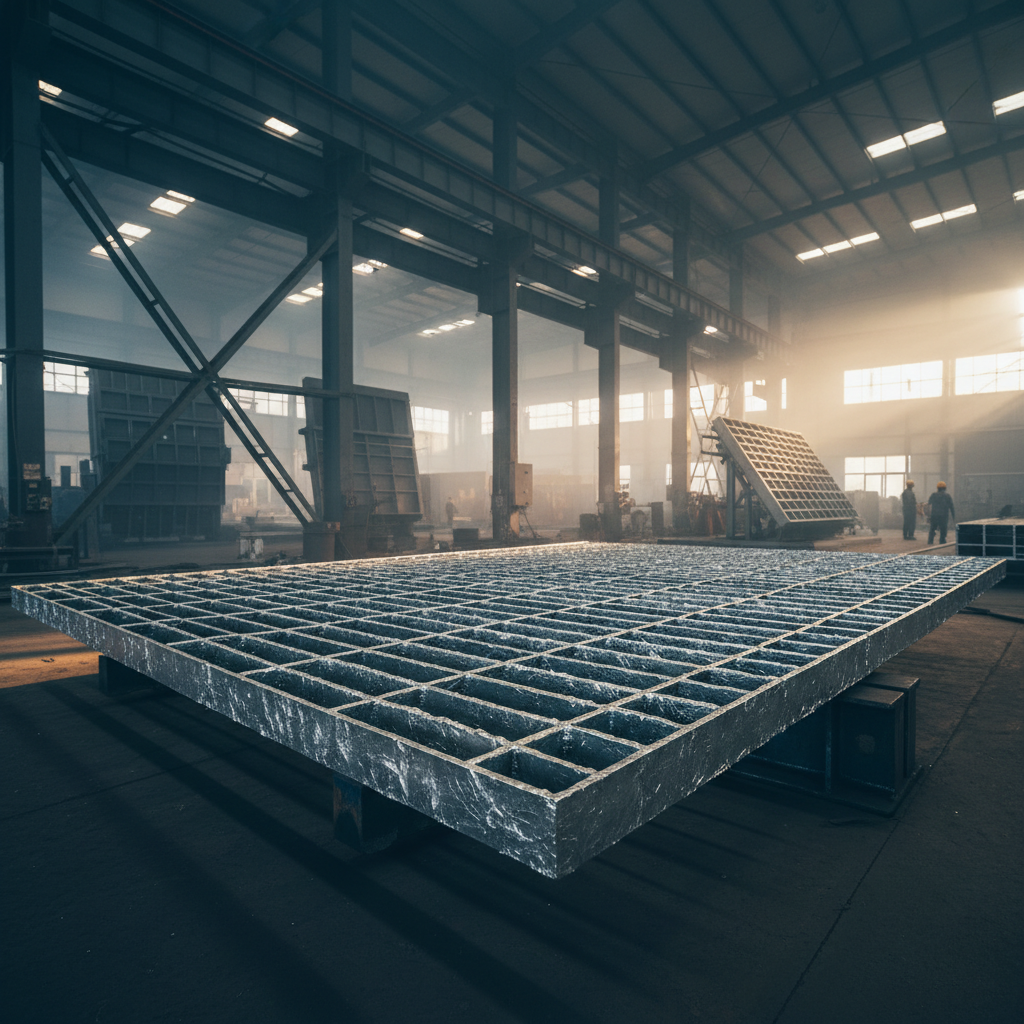
Aluminum grating suppliers provide essential structural components designed for high-strength, lightweight, and corrosion-resistant flooring and platform solutions. These specialized systems are critical in environments where traditional steel would succumb to oxidative stress or where reducing structural dead load is a primary engineering requirement.
Selecting the right supplier involves analyzing material grades, manufacturing tolerances, and the ability to customize grating patterns for specific safety and load-bearing needs. In industrial settings, the failure to source high-grade aluminum can lead to premature structural degradation and increased maintenance costs.
This guide examines the technical specifications of aluminum grating, the criteria for evaluating top-tier suppliers, and the practical application of these systems across the chemical, marine, and architectural sectors to help procurement teams make informed decisions.

1Understanding Aluminum Grating Standards

Aluminum grating is engineered to meet strict international standards for load-bearing capacity and safety. Most reputable aluminum grating suppliers adhere to ASTM or ISO specifications to ensure that the alloys used—typically 6061-T6 or 6063-T5—provide the necessary balance of tensile strength and weldability. These standards dictate the bearing bar dimensions and the spacing of cross-bars to prevent deflection under peak loads.
The manufacturing process involves precise extrusion or welding of aluminum profiles. Depending on the intended use, gratings can be produced as welded or pressed-locked, with the latter offering higher flexibility for modular installations. Quality control focuses on the integrity of the joints and the flatness of the finished panel.
Understanding these standards is the first step in avoiding structural failure. Procurement officers must verify that the supplier's production capacity matches the project's scale and that the specified alloy is compatible with the local atmospheric conditions, such as high salinity in coastal regions.
2Core Technical Advantages of Aluminum Systems
The primary appeal of sourcing from specialized aluminum grating suppliers is the inherent corrosion resistance of the material. Unlike carbon steel, aluminum forms a natural oxide layer that protects the underlying metal from moisture and chemical attacks, significantly reducing the need for repeated painting or galvanizing.
Furthermore, aluminum grating offers a non-sparking characteristic, which is a critical safety requirement in hazardous environments such as oil refineries or chemical processing plants. This prevents accidental ignitions during tool drops or friction-based movements on the platform.
From a structural perspective, the reduction in dead weight minimizes the stress on the supporting beams of a facility. This often allows engineers to specify lighter support structures, leading to a cascading reduction in overall project material costs without compromising safety.
3Industrial Application Scenarios
Aluminum grating is extensively deployed in marine environments, such as offshore oil rigs and piers, where the salt-laden air would rapidly degrade other metals. The ability of aluminum to withstand chloride-induced corrosion makes it the gold standard for walkways and drainage covers in these zones.
In the food and pharmaceutical industries, aluminum grating is preferred due to its hygienic properties and ease of cleaning. The non-porous surface prevents the buildup of contaminants, and the grating structure allows for efficient fluid drainage during wash-down cycles.
Architectural applications also leverage aluminum's aesthetic versatility. With options for anodizing or powder coating, aluminum grating suppliers can provide solutions that meet strict design codes while maintaining the structural integrity required for public balconies, ramps, and decorative facades.
4Performance Metrics and Material Efficiency
When analyzing the performance of aluminum grating, the most critical metric is the load-deflection ratio. Engineers must calculate the maximum allowable deflection to ensure user comfort and safety. Aluminum grating suppliers often provide load tables that correlate bar thickness and spacing with maximum load capacities.
Efficiency is also measured by the life-cycle cost. While the initial procurement price of aluminum may be higher than mild steel, the total cost of ownership is lower due to the absence of corrosion-related replacements and the reduced cost of installation labor.
aluminum grating suppliers Performance Metrics
The data indicates a clear advantage in durability and installation efficiency. By leveraging the properties of aluminum, facilities can extend their maintenance intervals from 3-5 years (for painted steel) to over 15 years with minimal intervention, depending on the environmental exposure.
5Procurement and Supplier Selection Criteria
Selecting from various aluminum grating suppliers requires a rigorous evaluation of their manufacturing capabilities. A key indicator of quality is the precision of the welding process; poor welds not only weaken the structure but also create sites for localized corrosion.
Customization capacity is another vital factor. Projects often require specific cut-outs for piping or non-standard panel sizes. Suppliers who offer in-house CNC cutting and precision trimming can significantly reduce the time spent on site-adjustments, accelerating the overall project timeline.
Finally, lead times and logistics should be analyzed. Because aluminum is a globally traded commodity, experienced suppliers have stable supply chains that mitigate the risk of price volatility and delivery delays, ensuring that construction schedules remain on track.
6Limitations and Maintenance Considerations
Despite its advantages, aluminum grating has limitations. It generally possesses lower absolute strength compared to heavy-duty carbon steel. Therefore, it is not suitable for extreme heavy-load industrial flooring where massive machinery or heavy vehicle traffic is present without significant reinforcement.
Another consideration is the risk of galvanic corrosion. When aluminum grating comes into direct contact with steel supports in a moist environment, an electrochemical reaction can occur. This requires the use of insulating gaskets or specialized coatings at the contact points to prevent rapid degradation.
Maintenance is minimal but not non-existent. Periodic inspections should be conducted to check for mechanical damage to the oxide layer or loosening of the fastening clips, especially in high-vibration environments where fasteners may shift over time.
7Comparison of Grating Material Options
Deciding between different materials involves a trade-off between initial cost, weight, and longevity. Aluminum is often the middle ground, offering far superior corrosion resistance than steel and better structural strength than fiberglass (FRP) in specific load cases.
For environments where electrical insulation is the absolute priority, FRP might be preferred. However, for projects requiring high fire resistance and structural rigidity without the weight of steel, aluminum remains the optimal choice.
| Material | Corrosion Resistance | Weight | Primary Use Case |
|---|---|---|---|
| Aluminum | Excellent | Low | Marine & Chemical Plants |
| Galvanized Steel | Moderate | High | Heavy Industrial Flooring |
| Stainless Steel | Very High | High | Ultra-Pure Lab/Medical |
| FRP/Composite | Exceptional | Very Low | Highly Acidic Environments |
| Mild Steel | Low | High | Temporary Structures |
| Cast Iron | Moderate | Very High | Heavy Duty Drainage |
Ultimately, the choice depends on the specific environmental stressors and the budget structure of the project. By partnering with experienced aluminum grating suppliers, companies can optimize their material selection to maximize safety and minimize long-term expenditure.
Frequently Asked Questions
Conclusion
Aluminum grating represents a high-performance alternative to traditional flooring materials, offering a strategic blend of corrosion resistance, lightweight structural efficiency, and safety. By carefully evaluating aluminum grating suppliers based on their material certifications, customization capabilities, and technical support, organizations can significantly reduce long-term maintenance burdens while enhancing workplace safety.
For procurement teams and engineers seeking reliable, high-grade aluminum solutions tailored to specific industrial or architectural requirements, further technical data and product specifications can be reviewed at www.cndowelltech.com.