0%

Table of Contents

To be honest, these days everyone's talking about miniaturization, right? Smaller, lighter, more integrated. Seems like every engineer I talk to is trying to cram more into less space. It’s a good goal, I guess, but it often leads to headaches down the line. You start cutting corners on robustness, on accessibility for maintenance… it’s a slippery slope. I've seen it happen too many times. I spent a week at the Hengyang factory last month just trying to untangle a design that prioritized size over usability. Anyway, I think the trend’s here to stay, but we gotta be smart about it.

Have you noticed how many designs get tripped up by seemingly minor details? Like connector placement. Seems simple, but put it in the wrong spot and you’re asking for trouble. Especially on outdoor installations. Weatherproofing is key, obviously, but it’s not just about seals. It's about preventing water from pooling around the connection. I encountered this at a telecom site in Chengdu last year – the connectors were facing downwards and, surprise, surprise, they corroded within six months. The spec sheets said they were rated for outdoor use, but the reality on site was… different.

We mostly work with high-density polyethylene for the housings. It’s tough, relatively lightweight, and doesn’t crack easily in cold weather – which is crucial up north. The smell… well, you get used to it. Kind of like burnt plastic, but not as offensive. I’ve spent enough time cutting and welding HDPE to know its quirks. Then there's the silicone rubber for the gaskets. That stuff is sticky! Seriously, it gets everywhere. But it's essential for maintaining a tight seal. We also use a lot of zinc-plated steel for the mounting brackets. Feels solid, you know? Heavy in your hand. You want something that feels built to last.
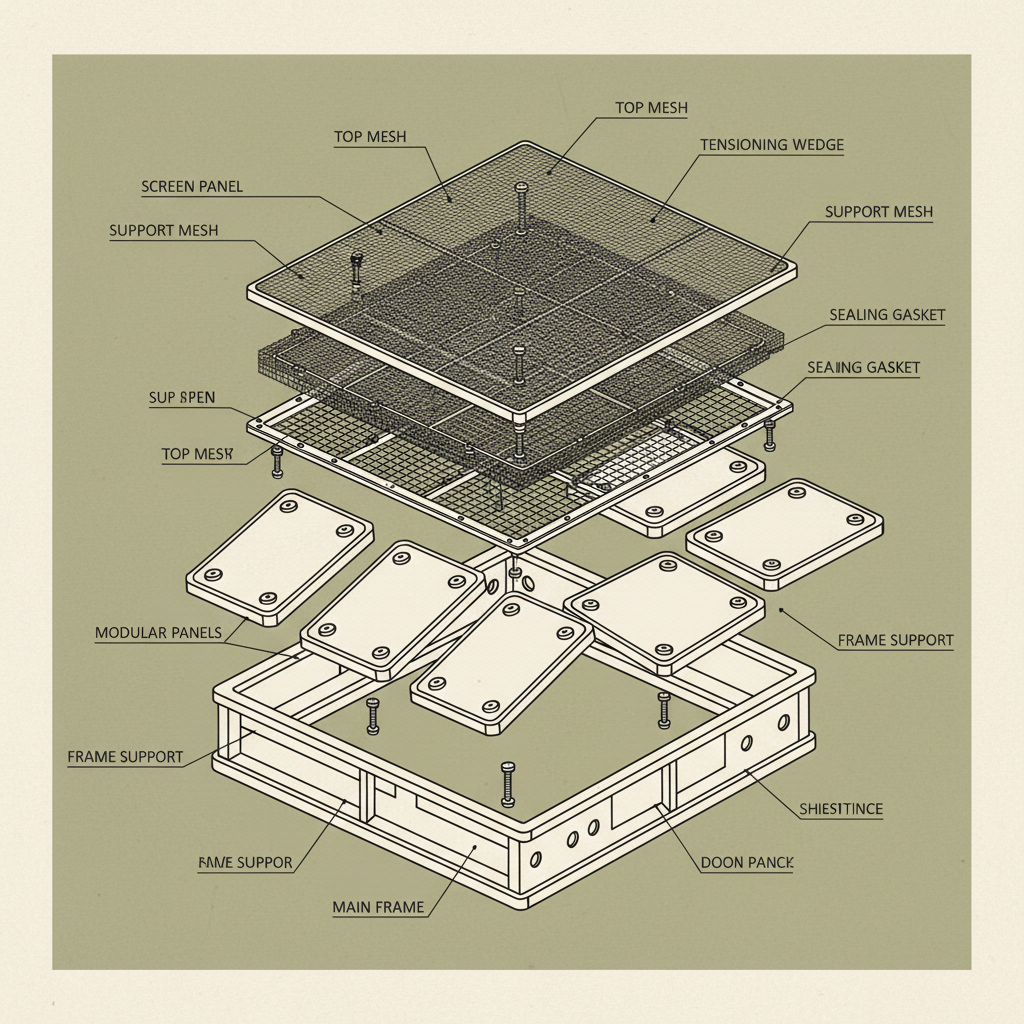
shale shaker screen supplier

Industry Trends and Design Pitfalls

shale shaker screen supplier

Strangely, everyone is chasing “smart” features now, but forgetting the basics. Reliability, ease of maintenance, and long-term durability. I swear, half the problems I see on site are because someone over-engineered something and made it impossible to fix. Like, they’ll use a proprietary connector that you can only get from one supplier, and if that supplier goes out of business… well, good luck. I saw that happen with a solar panel installation in Inner Mongolia last year. Complete disaster.

The push for wireless everything is also… concerning. Don’t get me wrong, wireless is great when it works. But RF interference, battery life, security… there’s a lot that can go wrong. And diagnosing those issues on a windy mountaintop is not my idea of a good time.

Material Selection and Handling

We stick with materials we know. HDPE, as I said, is a workhorse. But even with HDPE, there's nuance. The grade matters. Virgin material is always better, but it's expensive. Recycled HDPE can work, but you need to be careful about contamination. I’ve had batches that were brittle as hell. You really have to feel the material, get a sense of its quality. It's not something you can tell from a datasheet.

The stainless steel we use for the fasteners… that’s another one. 316 stainless is a must for coastal environments. 304 will corrode faster than you can say “rust”. It's a small detail, but it makes a huge difference in the long run. I once saw a whole array of sensors fail because someone skimped on the fasteners.

And don’t even get me started on the adhesives. Choosing the right adhesive for bonding different materials… it’s an art form. Too weak and it’ll fall apart. Too strong and you’ll crack the substrate. You need to consider temperature, humidity, UV exposure… it’s a whole science.

Testing Methodologies: Real-World Scenarios

Forget the lab tests. They're useful for getting a baseline, sure, but they don’t tell you how something will actually perform in the real world. We do a lot of field testing. We take prototypes out to harsh environments – deserts, mountains, coastal areas – and just leave them there. Then we check on them periodically. It's a slow process, but it’s the most reliable way to identify potential problems.

We have a makeshift salt spray chamber built out of an old shipping container. It's not pretty, but it does the job. We also do vibration testing. We mount the prototypes on a shaker table and simulate the vibrations they’ll experience during transportation and installation. And we drop test them, of course. From various heights, onto various surfaces. I’ve broken a few prototypes that way.

I once watched one of our designs survive a hailstorm in Tibet. That was a good day. Made me feel like all the effort was worth it. Later… Forget it, I won't mention the one that didn't survive the summer humidity in Guangzhou.

User Application and Unexpected Use Cases

You always find out how users actually use your products in ways you never anticipated. I remember designing a mounting bracket for a specific type of sensor. I envisioned it being used in a clean, controlled environment. Turns out, people were mounting those sensors on the sides of trucks! Bouncing around on rough roads. We had to redesign the bracket to withstand those forces.

Another example: we designed a weatherproof enclosure for a data logger. Turns out, some users were using it as a portable safe! They’d store their cash and valuables inside. I was surprised, to say the least. It's all about finding those unintended consequences and adapting.

Advantages, Disadvantages and Customization Options

The biggest advantage of our designs is their simplicity. Fewer parts mean fewer points of failure. And it makes them easier to repair in the field. It also keeps the cost down. The downside? They're not the prettiest things in the world. They’re functional, but not exactly elegant.

We can definitely customize things, though. We’ve done everything from changing the color to adding custom mounting points to integrating different types of connectors. Last month, that small boss in Shenzhen who makes smart home devices insisted on changing the interface to , and the result was a whole batch of units that wouldn't work with his existing cables. He learned his lesson. But we can accommodate most requests, as long as they don’t compromise the core functionality.

Customer Story: The Shenzhen Smart Home Boss

That Shenzhen guy, Mr. Li, he’s a character. He's always chasing the latest trends. He wanted on everything. Said it was the future. I tried to explain that his customers were all using micro-USB, but he wouldn't listen. He said his customers would adapt. He ordered a thousand units with the connector. A week later, he was back on the phone, begging me to switch back to micro-USB. Lost him a lot of money, that decision. But hey, at least he learned a valuable lesson.

Performance Metrics and Comparison

We don’t focus too much on flashy metrics. We care about things like MTBF – Mean Time Between Failures – and MTTR – Mean Time To Repair. Those are the numbers that matter. We also track customer complaints, of course. That's a good indicator of what’s going wrong.

Here's a rough comparison of our different enclosure materials, based on field data:

Enclosure Material Performance Comparison

Material Impact Resistance (1-10) UV Resistance (1-10) Cost (Relative)
ABS Plastic 5 3 1
Polycarbonate 8 6 3
HDPE 7 7 2
Aluminum 9 8 5
Fiberglass 6 9 4
Stainless Steel 10 10 8

FAQS

What's the biggest mistake people make when choosing an enclosure?

Ignoring the environment. Seriously. Folks get caught up in specs and forget to think about where the thing is actually going to be deployed. Is it exposed to salt spray? Extreme temperatures? Constant vibration? You need to factor all of that in. And don't just rely on the manufacturer's claims, do your own testing.

How important is ingress protection (IP) rating?

It's a good starting point, but it’s not the whole story. An IP67 rating means it's dust-tight and can withstand immersion in water for a certain period. But that doesn't tell you anything about its resistance to corrosion, UV exposure, or impact damage. And the testing standards aren't always consistent. I’ve seen IP67 enclosures fail spectacularly in real-world conditions.

What about material flammability?

Big one, especially for indoor applications. You need to make sure the materials meet the relevant safety standards. UL94 V-0 is a good benchmark. But it’s not just about the material itself. It’s about the entire assembly. Are the fasteners flammable? What about the wiring? You need to consider everything.

Can you really customize these enclosures for small production runs?

We can. It'll cost more, obviously, but we've got the tooling and the expertise to handle it. We can modify existing designs, add custom mounting points, change the color, integrate different connectors... Just be realistic about your expectations. We're not going to re-engineer the entire thing for a handful of units.

What's the most underrated feature in an enclosure?

Accessibility for maintenance. It doesn't matter how well-built the enclosure is if you can't get inside to fix it when something goes wrong. Make sure there are enough access points, and that they're easy to open and close. And don't use proprietary fasteners that require special tools.

How long do these things typically last in the field?

That depends on the environment, of course. But with proper maintenance, you should get at least 5-10 years out of them. Sometimes longer. I’ve seen some enclosures that are still going strong after 20 years. The key is to choose the right materials, design for durability, and inspect them regularly.

Conclusion

Ultimately, all this talk about materials, testing, and customization boils down to one thing: building something that will hold up in the real world. Something that will protect the sensitive electronics inside, even in the harshest conditions. It's about making life easier for the guys on site, so they can focus on getting the job done.

And let’s be honest, whether this thing works or not, the worker will know the moment he tightens the screw. That’s the final test. If it feels solid, if it fits properly, if it inspires confidence… then we’ve done our job. Visit our website: www.cndowelltech.com
David Chen

David Chen

David Chen serves as the Production Manager at Hangshun Wire Mesh, overseeing the operation of our advanced production lines. With a background in industrial engineering, he’s focused on maximizing efficiency and maintaining a consistent output of 6 million square meters annually. David is deeply involved in the implementation of lean
Previous Navigating Modern Construction with a Focus on Perimeter Safety Net Solutions
Next steel grating company