You know, things are moving fast these days. Everyone's talking about prefabrication, modular construction… Honestly, it’s a bit of a whirlwind. Been seeing a lot of it pop up on sites, which is good, means people are trying to be more efficient. But it's not all sunshine and roses, believe me. There’s always a catch. You start thinking things are getting simpler, and then… boom. Another problem. It’s the nature of the beast.
What’s really been getting my attention is the push for lighter, stronger materials. Everyone wants to cut weight, right? Makes transport easier, installation faster. But you gotta be careful. You can’t just chase the numbers on a spec sheet. I’ve seen too many things that look great on paper fall apart the second you actually try to use them on a real job site. It’s about feel, too. You have to know the material.
To be honest, it's a lot like picking a good noodle. It's not just about the protein content, you know? It has to have the right chew, the right smell when it cooks… same with construction materials.
Industry Trends & Design Pitfalls
Have you noticed everyone’s obsessed with minimizing connections? Fewer bolts, fewer welds, fewer points of failure. Sounds great, right? But it often leads to overly complex designs that are a nightmare to adjust in the field. I encountered this at a factory in Tianjin last time, they were making these fancy bracket systems...looked amazing in the drawings. But getting those things aligned perfectly during installation? Forget about it. Took twice as long, and the guys were cursing under their breath the whole time.
Strangel,y, the simpler solutions are often the best. Sometimes, just a good old-fashioned bolt and a bit of common sense is all you need. Don’t overthink it.
Materials: What We're Actually Using
So, materials… we’re seeing a lot more high-strength steel alloys, obviously. But the real game-changer has been the advancements in composite materials. Carbon fiber reinforced polymers – they’re light, they’re strong, they don’t rust. But man, they’re expensive. And cutting them? You need special tools, you need dust extraction, you need respirators. It’s a whole thing. Then there's the new generation of engineered plastics. They smell weird when you heat-weld them, though. Seriously, a peculiar aroma. But they’re holding up pretty well to the elements, which is a plus. And the recycled content… that's something we're paying more attention to these days.
The feel of the material is important. You can tell a lot just by handling it. A good steel beam should have a certain weight, a certain resonance when you tap it. You learn these things after a while. It's almost instinctive.
And don’t even get me started on the different grades of rubber. Some of that stuff is like trying to wrestle an octopus.
Real-World Testing: Beyond the Lab
Lab testing is fine, sure. But it doesn’t tell you how something will hold up to a week of rain, a month of sun, or a careless forklift driver. We do a lot of our testing right on the job site. We'll overload the system, we'll bash it with a hammer (don’t tell the engineers!), we'll leave it out in the elements for a few weeks just to see what happens. It’s not scientific, but it’s real.
Anyway, I think a lot of people forget that construction sites are inherently chaotic. Things get dropped, things get hit, things get exposed to conditions they weren't designed for. You gotta build for that. You need a safety factor, a margin for error. Otherwise, things will break, and someone will get hurt.
We also do what we call "stress tests" where we simulate the worst possible loading conditions. It’s not pretty. Sometimes things bend, sometimes things crack, sometimes things just completely fail. But that’s the point. We want to find those weaknesses before they cause a problem in the field. It's way cheaper to fix a design flaw on the drawing board than it is to rebuild a section of a structure that's collapsed.
I remember one time, we were testing a new type of scaffolding. We overloaded it way beyond its rated capacity, and one of the joints buckled. Turned out there was a microscopic flaw in the welding. If we hadn’t caught that, who knows what could have happened.
How Users Really Use It
This is where things get interesting. You design something to be used in a specific way, but then you get out on site and see people using it for things you never even imagined. I’ve seen guys using scaffolding as a makeshift workbench, using safety nets as impromptu hammocks, using concrete forms as… well, I won’t go into that. The point is, people are resourceful. They’ll find a way to make things work, even if it’s not the way you intended.
It’s a good reminder that design isn’t just about engineering. It’s about understanding how people actually think and how they actually work. You have to anticipate the unexpected.
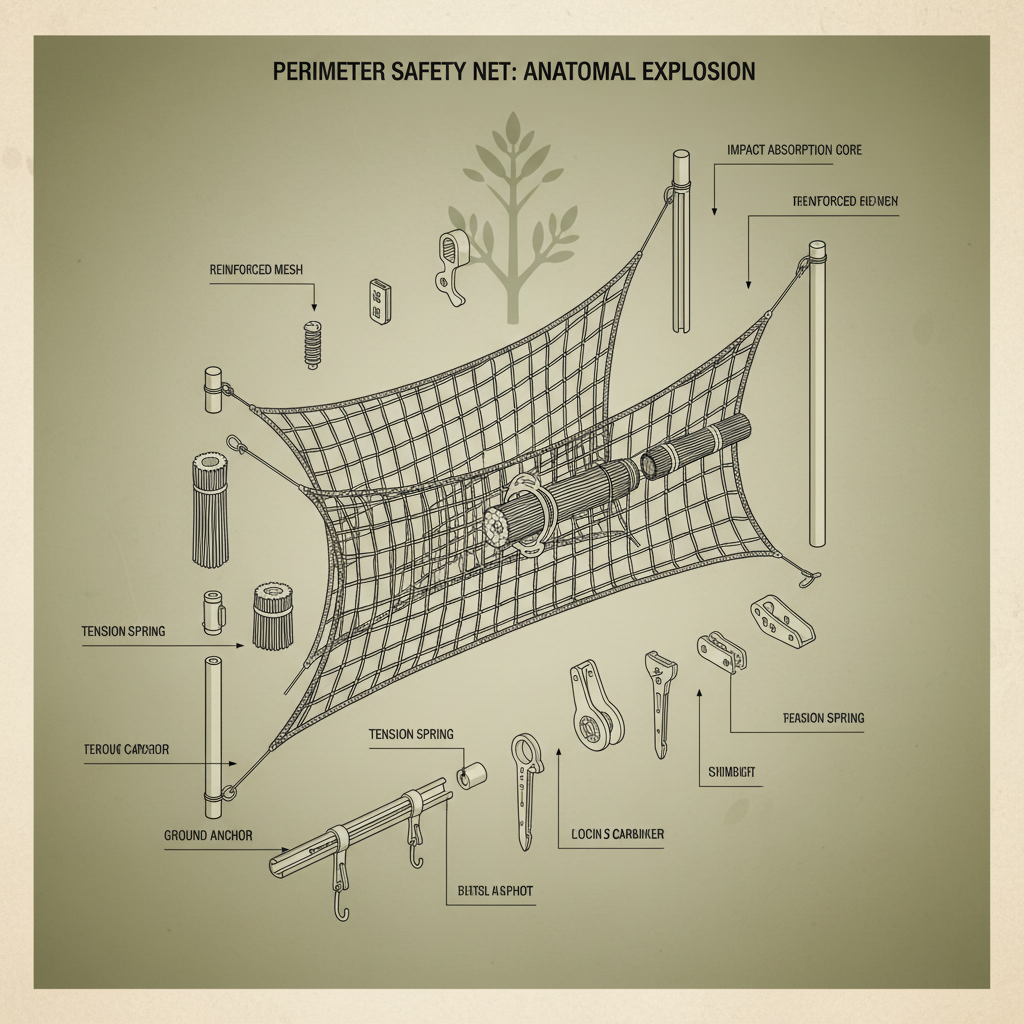
Perimeter Safety Net Usage Scenarios
Advantages & Disadvantages
Look, the advantages are pretty clear: improved safety, reduced debris, better site organization. It makes things… cleaner, more professional. It’s good for morale, good for PR. But it’s not a silver bullet. Installation can be a pain, especially on uneven terrain. And it's not always cheap. You gotta factor in the cost of the materials, the labor, the maintenance. And sometimes, it just gets in the way.
Plus, it can create a false sense of security. People start to rely on it too much, and they stop paying attention. That’s when accidents happen. You always have to maintain a healthy level of skepticism.
Customization & a Shenzhen Story
We get a lot of requests for customization. Different heights, different mesh sizes, different attachment methods. Most of the time, it’s pretty straightforward. But sometimes… Last month, that small boss in Shenzhen who makes smart home devices insisted on changing the interface to , and the result was a complete disaster. Apparently, he thought it looked “more modern.” It took us a week to explain why that was a terrible idea. The existing system was perfectly adequate, and switching to would have required a complete redesign of the anchoring system. He was not happy, but he eventually saw the light.
Anyway, I think the key is to be flexible, but also to be firm when necessary. You gotta listen to your customers, but you also gotta use your experience and your judgment. You gotta be willing to say “no” when something just isn’t going to work. And you gotta be prepared to explain why.
The Final Verdict
Ultimately, whether this thing works or not, the worker will know the moment he tightens the screw. It's about the feel, the stability, the confidence it gives him. All the calculations, all the simulations, all the lab tests… they don’t mean a thing if it doesn’t feel right in the field.
It's a tool, plain and simple. A good tool can make a job easier, safer, more efficient. A bad tool can make a job a nightmare. So, choose wisely. And always remember, common sense is your best friend.