High Tensile Helideck Safety Nets from aluminum bar grating suppliers
Ensuring personnel safety on elevated platforms, specifically helicopter landing decks, requires specialized perimeter protection that can withstand extreme environmental stress. Chain link helipad perimeter safety netting is engineered to prevent accidental falls and equipment slippage without obstructing the essential airflow and drainage required for aviation surfaces. By utilizing a high-tensile stainless steel core combined with a protective polymer coating, these systems provide a critical safety barrier that balances structural rigidity with the flexibility needed for rapid installation in offshore or rooftop environments.
For procurement managers and safety engineers, selecting the right safety netting involves evaluating load-bearing capacities and corrosion resistance. The integration of 316L stainless steel ensures that the netting maintains its integrity even when exposed to constant salt spray and UV radiation, making it a vital component for any compliant helideck safety system.

Engineering Specifications of Helideck Perimeter Safety Netting Systems
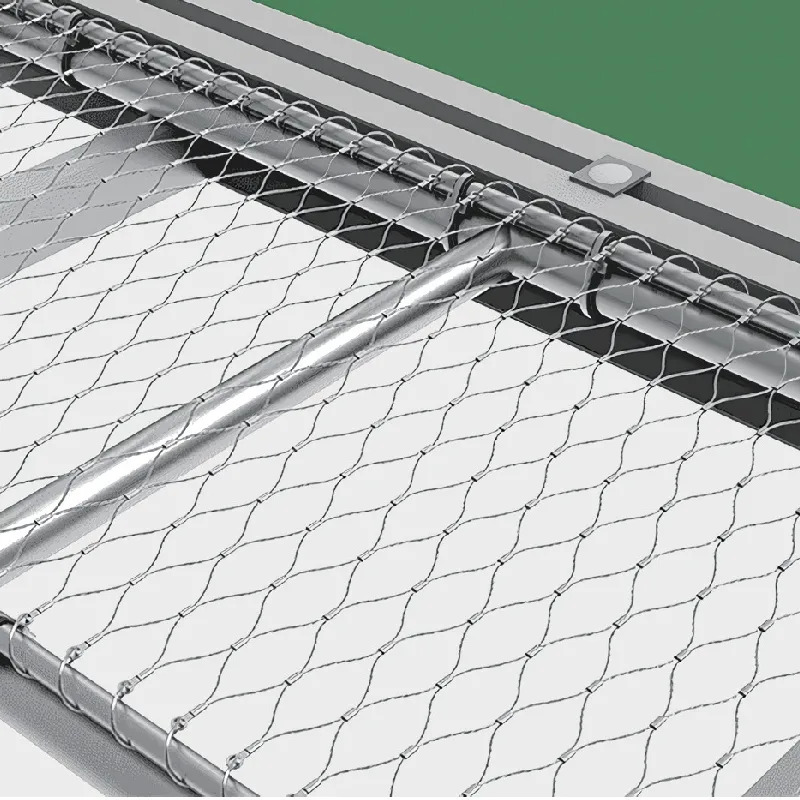
The structural integrity of a helipad safety net depends heavily on the material grade and the weaving process. The core of this system is constructed from 3mm 316L stainless steel wire, a grade renowned for its superior resistance to pitting and crevice corrosion in chloride-rich environments. This core provides the necessary tensile strength to achieve a load capacity of up to 125 kg, ensuring that the netting can effectively arrest a falling object or person without catastrophic failure.
To further enhance durability, the stainless steel core is encased in a PVC coated surface, increasing the total wire diameter to 4mm. This protective layer serves several purposes: it prevents mechanical abrasion of the steel, provides an additional barrier against the elements, and allows for high visibility through common colors like green or black. The mesh opening is typically standardized at 2" × 2" (50 mm × 50 mm), which is optimized to prevent personnel from slipping through while minimizing wind resistance.
- Core Material: Grade 316L Stainless Steel for maximum corrosion resistance.
- Coating: High-grade PVC for environmental shielding and weatherproofing.
- Load Capacity: Engineered to support up to 125 kg.
- Structural Design: Bend end forms that create a firm, stable structure.

Application Logic in Harsh Offshore and Rooftop Environments
Safety netting for helipads is not a one-size-fits-all solution; it must be adapted to the specific geometry of the landing area. Whether installed on an offshore oil rig, a hospital rooftop, or a ship's deck, the netting must comply with strict international regulations such as CAP 437 and OGUK. These standards dictate the height, strength, and installation methods required to ensure the safety of flight crews and ground personnel during hazardous weather conditions.
The versatility of the chain link design allows for two primary procurement options: framed systems and frameless fabric. Framed nets utilize 12mm stainless steel rods to provide a rigid perimeter, which is ideal for fixed installations where permanent structural support is available. Conversely, frameless fabric can be cut and fitted arbitrarily, offering the flexibility needed for complex shapes or temporary modifications. This adaptability ensures that the netting remains taut and effective across the entire perimeter of the helideck, regardless of the platform's layout.
In practical operation, these nets are exposed to hurricanes, fog, snow, and intense solar radiation. The combination of 316L steel and PVC coating ensures that the system does not rust or become brittle over time, significantly lowering the total cost of ownership by reducing the frequency of replacement and maintenance inspections.
Evaluating Supplier Capabilities for Specialized Safety Mesh
When searching for reliable partners, it is essential to look beyond basic catalogs and examine the manufacturer's quality control infrastructure. A professional supplier should possess advanced production lines capable of maintaining consistency across millions of square meters of mesh. For safety-critical components like helipad nets, the availability of tensile testing machines, bending testers, and galvanizing detectors is non-negotiable.
The ability to provide a fully recyclable product also aligns with modern ESG (Environmental, Social, and Governance) goals for large-scale industrial projects. Furthermore, a supplier's experience in other high-stress sectors—such as petroleum mesh or pipe coating welded mesh—indicates a deeper understanding of material science and corrosion kinetics. This cross-industry expertise is what ensures that the product will perform as expected when deployed in the middle of the ocean.
Buyers should prioritize suppliers who can provide detailed material certifications and ensure that the PVC coating is applied uniformly to prevent "pinholes" where corrosion could start. By verifying these manufacturing capabilities, procurement teams can mitigate the risk of premature system failure and ensure full compliance with aviation safety audits.
Technical Comparison of Helideck Safety Netting Configurations
| Feature Parameter | Framed System (Rigid) | Frameless Fabric (Flexible) | Industry Standard | Performance Impact |
|---|---|---|---|---|
| Border Support | 12mm SS Rod | Cut-to-fit edge | CAP 437 / OGUK | Stability vs. Versatility |
| Installation Speed | Moderate | High | Application-specific | Project timeline efficiency |
| Load Distribution | Uniform/High | Dependent on anchor | Up to 125 kg | Impact absorption |
| Corrosion Risk | Very Low | Very Low | 316L Stainless Steel | Service life extension |
| Customization | Fixed Shapes | Arbitrary Shapes | Site-specific | Fitment precision |
Procurement Considerations for High-Tensile Safety Mesh
The procurement process for helideck safety netting should focus on the balance between initial investment and long-term durability. While lower-grade steels may seem cost-effective, they often fail within a few years in saline environments, leading to expensive emergency replacements and potential safety liabilities. Specifying 316L stainless steel from the outset is a strategic decision that ensures a longer service life and a lower cost of ownership.
Additionally, buyers must consider the packaging and delivery logistics. Since these products are often shipped to remote offshore locations, they must be securely wrapped in plastic film and housed in robust wooden cases to prevent deformation or contamination during transit. Ensuring that the supplier uses these industry-standard packaging methods prevents the arrival of damaged goods that could delay critical safety upgrades.
Finally, the ability to source from experienced aluminum bar grating suppliers or mesh manufacturers who understand the synergy between different grating and netting systems can streamline the design process. Integrated safety solutions often perform better than mismatched components from multiple vendors, as the attachment points and tensioning mechanisms are designed to work in harmony.
Future Trends in Aviation Perimeter Safety Systems
The evolution of helideck safety is moving toward "smart" monitoring and more sustainable materials. We are seeing an increased demand for netting that can be integrated with sensor technology to alert facility managers when a net has been breached or has lost tension. This shift from reactive maintenance to predictive monitoring will further enhance the safety of offshore operations.
From a materials perspective, the focus is on enhancing the UV stability of PVC coatings to extend the interval between replacements. The industry is also exploring high-performance polymers that offer even greater abrasion resistance while remaining fully recyclable. As global safety regulations become more stringent, the reliance on documented tensile strength and certified material origins will become the primary filter for supplier selection.
Ultimately, the goal is to create a zero-failure environment. By combining advanced metallurgical engineering with flexible design patterns, the next generation of perimeter safety netting will provide even more robust protection without compromising the operational efficiency of the helipad.
Frequently Asked Questions on Helipad Safety Netting
What is the primary difference between framed and frameless safety netting?
Framed netting includes a 12mm stainless steel rod border that provides a rigid, pre-defined shape and enhanced stability. Frameless netting is a flexible fabric that can be cut arbitrarily to fit unique or irregular perimeter shapes on-site.
Why is 316L stainless steel used instead of standard 304 stainless steel?
316L contains molybdenum, which provides significantly higher resistance to chlorides and salt spray. This is critical for offshore helipads where 304 steel would succumb to pitting corrosion much faster.
Does this netting comply with international aviation standards?
Yes, the chain link helipad perimeter safety netting is designed to comply with major industry regulations including CAP 437 and OGUK, ensuring it meets the safety requirements for helideck operations.
What is the maximum load capacity of the netting?
The system is engineered with a 3mm stainless steel core that allows the load capacity to reach up to 125 kg, providing sufficient strength to prevent personnel or equipment from falling.
How does the PVC coating affect the performance of the net?
The PVC coating acts as a protective film that resists rust, corrosion, and harsh weather (rain, snow, hurricanes). It also prevents the steel core from rubbing against other surfaces, extending the product's overall lifespan.
Can these nets be installed on hospital rooftop helipads?
Absolutely. While highly effective for offshore use, these nets are also commonly used for safety protection at rooftop and hospital helipads due to their weather resistance and high tensile strength.
Technical References and Industry Standards
- Civil Aviation Authority (CAA) - CAP 437 Standards
- Offshore Energies UK (OEUK) Safety Guidelines
- ASTM International - Stainless Steel Material Specifications
- ISO Standards for Corrosion Testing and Protective Coatings
Selecting a high-performance perimeter safety system is a critical investment in operational safety. By focusing on material grade, regulatory compliance, and manufacturing precision, you can ensure a secure environment for all helipad activities.
Related Industry Insights