High Strength Helipad Safety Nets From aluminum grating manufacturers
Ensuring the safety of personnel and aircraft on helipads requires specialized perimeter containment systems capable of withstanding extreme atmospheric conditions. Chain link helipad perimeter safety netting is engineered specifically to prevent falls and secure the edges of flight decks, whether located on offshore oil platforms, hospital rooftops, or ship decks. By combining the structural integrity of high-grade stainless steel with a protective polymer layer, these systems provide a critical safety barrier that satisfies stringent aviation and maritime safety regulations.
For procurement managers and safety engineers, selecting the right netting involves balancing tensile strength, corrosion resistance, and compliance with standards such as CAP 437 and OGUK. The integration of a 316L stainless steel core ensures the system can handle significant load capacities, while the PVC coating prevents degradation from salt spray and UV exposure, which is paramount for long-term reliability in harsh environments.

Structural Engineering of High-Tensile Helideck Safety Netting
The performance of a perimeter safety net is defined by its material composition. This specific system utilizes 316L stainless steel wire as its core, chosen for its superior resistance to pitting and crevice corrosion compared to standard grades. The core wire diameter of 3mm provides the necessary tensile strength to support a load capacity of up to 125 kg, ensuring that the net remains stable and effective during accidental impact or personnel falls.
To augment the metal's durability, a PVC coating is applied, increasing the overall wire diameter to 4mm. This protective film acts as a primary defense against the corrosive effects of salt-laden air, humidity, and industrial chemicals. The result is a flexible yet robust fabric that resists rust and maintains its structural integrity across various weather extremes, including hurricanes, heavy snow, and intense solar radiation.
- Core Material: 316L Stainless Steel for maximum strength.
- Surface Treatment: High-grade PVC coating for corrosion protection.
- Load Capacity: Stable support up to 125 kg.
- Environmental Resistance: Immune to fog, rain, and UV degradation.

Compliance Standards and Regulatory Requirements for Flight Decks
Safety netting on helipads is not merely a recommendation but a regulatory necessity. Systems must comply with international standards such as CAP 437 (Civil Aviation Authority) and OGUK (Oil & Gas UK). These regulations dictate the minimum strength, mesh size, and installation methods required to ensure that the perimeter remains a secure boundary without interfering with aircraft operations.
The use of a 2" x 2" (50mm x 50mm) mesh opening is designed to prevent personnel from slipping through while allowing wind and water to pass through freely, reducing the wind load on the structure. Furthermore, the option for framed or frameless configurations allows engineers to adapt the netting to the specific geometry of the helipad, whether it is a standard circle, a rectangle, or a custom shape, without compromising the tension of the mesh.
Deployment Scenarios in Offshore and Urban Environments
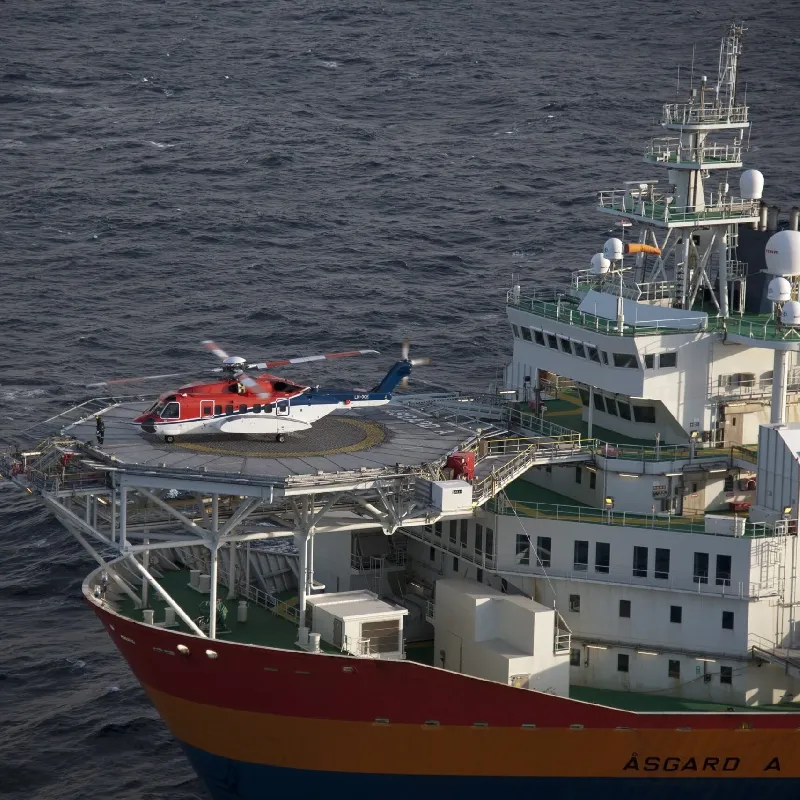
The application of chain link perimeter safety netting varies based on the operational environment. In offshore platforms, the netting must withstand constant salt spray and high wind speeds. Here, the PVC-coated stainless steel is essential to minimize the cost of ownership by extending the replacement cycle.
In rooftop hospital helipads, the focus is on rapid installation and high visibility. The netting is often provided in green or black to meet architectural requirements while maintaining a high safety profile. Additionally, these nets are utilized on ship helipads, where the flexibility of the material allows it to absorb energy during impact, providing a safer outcome for personnel.
Beyond aviation, the versatility of this high-strength mesh makes it suitable for various agricultural and industrial fencing where corrosion resistance is a priority, although its primary engineering focus remains the high-risk perimeter of flight decks.
Technical Specifications and Performance Matrix
| Specification Item | Technical Detail | Performance Value | Standard Compliance |
|---|---|---|---|
| Core Material | 316L Stainless Steel | High Tensile Strength | Marine Grade |
| Coating Type | PVC Polymer | Corrosion Resistant | Weatherproof |
| Wire Diameter | 3mm (Core) / 4mm (Total) | High Load Bearing | Industry Standard |
| Mesh Opening | 50mm x 50mm | Anti-Fall Security | CAP 437 / OGUK |
| Load Capacity | Up to 125 kg | Stable Impact Absorption | Safety Certified |
Evaluating Supplier Capabilities for Specialized Safety Mesh
When sourcing safety netting, buyers should look for manufacturers with integrated testing capabilities. A reliable supplier must employ tensile testing machines and bending testers to verify that every batch of mesh can handle the rated load. For PVC-coated products, galvanizing detectors and coating thickness gauges are necessary to ensure the protective layer is uniform and free of pinholes, which could lead to premature oxidation of the core wire.
Manufacturing capacity also plays a role in project timelines. A facility with advanced production lines and a high annual output can ensure consistency in mesh size and tension across large-scale installations. Furthermore, the ability to provide both framed options (using 12mm stainless steel rods) and frameless fabric allows for greater flexibility during the installation phase, reducing onsite labor costs.
Maintenance, Sustainability, and Lifecycle Management
The total cost of ownership for helipad safety systems is heavily influenced by the maintenance interval. Because 316L stainless steel and PVC are highly resistant to the elements, these nets require significantly less upkeep than galvanized steel alternatives. Regular inspections should focus on the attachment points and the integrity of the PVC coating; however, the inherent durability of the materials ensures a long service life even in the most aggressive maritime climates.
From a sustainability perspective, the materials used in these safety nets are fully recyclable. At the end of the product's operational life, the stainless steel core can be reclaimed, reducing the environmental footprint of the facility. This alignment with green procurement policies makes high-grade stainless steel netting a preferred choice for modern infrastructure projects.
Frequently Asked Questions About Helipad Safety Netting
What is the primary difference between 304 and 316L stainless steel for safety nets?
316L stainless steel contains molybdenum, which provides significantly higher resistance to chlorides and salt spray compared to 304. This makes 316L the essential choice for offshore and coastal helipads to prevent pitting corrosion.
Does the PVC coating affect the strength of the safety net?
No, the PVC coating is a protective layer. The tensile strength and load-bearing capacity are provided by the 3mm stainless steel core wire. The coating simply ensures that the core remains protected from the environment.
Can these nets be customized for non-standard helipad shapes?
Yes, the netting can be supplied as a frameless fabric that can be cut arbitrarily to fit any shape, or it can be delivered with custom-manufactured frames using 12mm stainless steel rods for specific geometries.
Which international regulations govern the installation of helideck nets?
The most commonly recognized regulations are CAP 437 and OGUK, which set the benchmarks for safety, material strength, and installation parameters for offshore and onshore flight decks.
What is the typical load capacity of a standard perimeter safety net?
Our chain link helipad perimeter safety netting is designed to have a stable load capacity of up to 125 kg, providing a secure barrier for personnel safety.
How is the product packaged for international shipping to offshore sites?
To prevent damage and contamination during transit, the netting is wrapped in plastic film and securely placed into wooden cases, ensuring it arrives in pristine condition for installation.
Technical References and Industry Standards
- Civil Aviation Authority (CAA) - CAP 437 Guidelines
- Offshore Energies UK (OEUK) Safety Standards
- ASTM International - Stainless Steel Material Specifications
- ISO Standards for Corrosion Protection of Metals
For organizations seeking reliable perimeter protection, prioritizing material grade and regulatory compliance is the only way to ensure operational safety. By selecting high-tensile 316L stainless steel systems, operators can minimize risks and long-term maintenance costs.
Related Industry Solutions